
Inside Jefferson County Property Tax Records
A Jefferson County property tax record is not one all-purpose title file. It is assembled from assessment data on one side and collection data on the other. CAPture carries the parcel's valuation and tax information. It also holds land and building details, deed references, sketch, and GIS connection. The Tax Collector system handles the bill side. It covers roll type, year, bill number, payment status, discounts, delinquency, and the shopping-cart checkout. Always read the source label and year before comparing any figures.
| Record field | Meaning in the tax trail | Official source |
|---|---|---|
| Appraised value | County estimate of full value before the class ratio | CAPture and Board of Equalization |
| Assessed value | Appraised value multiplied by Alabama's applicable assessment ratio | CAPture |
| Exemptions | Approved relief that can reduce taxable value or liability | Tax Assessor |
| Tax bill and status | Amount billed, year, payments, discounts, or delinquency | Tax Collector |
| Property number | Collector's parcel key for matching a bill to the tract | Tax Collector search |
Neither the appraised nor the assessed value is the sale price. A deed can state an actual transaction amount. An appraisal only estimates value for assessment, while the bill applies class, exemptions, millage, and other lawful adjustments.
Three Jefferson Offices, Three Tax Jobs
Three Jefferson County offices split the tax work. The Tax Assessor keeps the assessment roll and exemption record. Valuation review belongs to the Jefferson County Board of Equalization. The Jefferson County Tax Collector bills and collects. Sending a valuation objection to the payment office only delays the answer. A payment question to the assessor gets the same delay.
For online work, begin with the CAPture help and search route. It carries valuation and parcel details. Write down the parcel number and tax year before moving to the Collector. When a web result is unavailable, the BOE page documents office access. County writings not served by a specialized portal can still be requested. Use Jefferson County NextRequest for those.
When Jefferson County property tax records disagree, compare the systems field by field. Confirm both screens show real estate, not personal property. Confirm the roll type and tax year too. Then check the parcel number and situs. Check the owner label, class, and exemption status too. Finish with the appraised value and assessed value. A new deed often records first. The assessment roll may catch up later. A corrected valuation can also land before the Collector adjusts the bill. A mailing-name difference often just marks who receives the tax bill.
Save a dated copy of each result before calling. Then give the office the exact parcel number, year, and field label. Include the displayed amount and source screen. Ask the Assessor about classification, exemptions, and assessment values. Ask the Board about a valuation protest. Billing, payment posting, discounts, penalties, and delinquency belong to the Collector. Keeping each question with its proper office keeps the answers straight. It also stops one figure from being mistaken for a correction of another.
Search Jefferson Assessments Four Ways
CAPture offers four ways to search: Property Address, Mailing Address, Owner, and Parcel Number. Each key answers a different question. Property Address pinpoints the site itself. Mailing Address follows the tax correspondence. Owner reflects the selected roll's name, and Parcel Number serves as the most exact database key. A mailing address proves nothing about occupancy, though, and an owner field can lag behind a recent deed.
| CAPture mode | Best starting fact | Practical check |
|---|---|---|
| Property Address | Street number and name | Try the street name if exact formatting fails |
| Mailing Address | Known tax-mail destination | Compare rather than equate it with situs |
| Owner | Roll name | Enter last name, then first name |
| Parcel Number | County parcel identifier | Use the portal's required no-space format |
Jefferson parcel numbers often appear with spaces. Enter the number without spaces, preserve any leading zeroes, and note the spaced version in your records.
Decode Jefferson County Tax Values
Alabama Revenue explains the sequence. Appraised value is multiplied by an assessment ratio to produce assessed value, and millage then drives the final tax calculation. The ratio depends on classification. Class III owner-occupied property is assessed at 10 percent. Class II runs 20 percent and Class I runs 30, so never apply the homeowner ratio to every parcel.
- Appraised value
- The assessor's estimate of full property value for the relevant year.
- Assessed value
- The appraised value after the statutory class ratio is applied.
- Millage
- A levy expressed in mills and applied in calculating tax.
- Homestead exemption
- Approved relief associated with qualifying owner occupancy and other requirements.
- Tax lien
- A claim resulting from unpaid tax; a tax certificate is not itself a deed transfer.
Label every calculation fully. Keep the appraisal year, class, exemptions, and taxing jurisdiction attached, because a correct number without those labels can look contradictory.
Look Up a Jefferson County Tax Bill
The Collector search takes one option at a time. Choose owner name, house and street, property number, or tax bill number through the Tax Collector property search. It also asks for roll type and year. Real Estate, Personal Property, and All Roll Types appear alongside individual years from 2019 through 2025 and an All Years choice.
- Find the parcel in CAPture and record the parcel number, owner spelling, situs, assessment year, class, and exemptions.
- Open the Collector search, select Real Estate and the intended year, then use the property number or address.
- Match the bill to the parcel and read payment status, discounts, delinquency labels, and bill number.
- Repeat for another year only when a year-to-year comparison is needed, keeping each result separately dated.
- Contact the Tax Collector when the bill status is unclear; contact the Assessor or BOE when the valuation or exemption is the issue.
Exact queries sometimes fail here. The Collector advises trying only the last name. Trying only the street name works too, and beats guessing at punctuation or unsupported wildcard rules.
See the Jefferson Tax Search Screen
The official Jefferson County Tax Collector search shows the search key, roll type, and tax year that must be chosen before a bill can be matched. Each choice comes first.
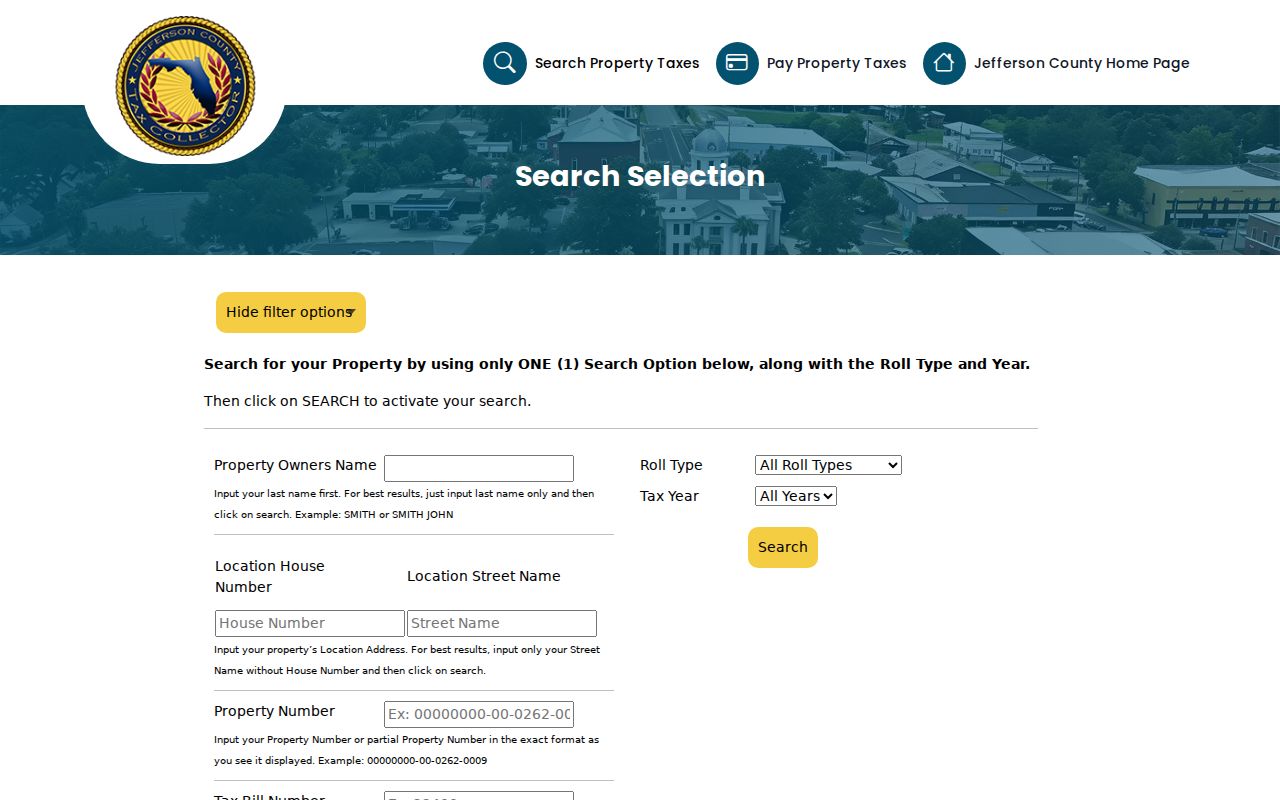
Any saved tax result should include both the selected roll and the year. An amount or owner name alone is not enough.
Verify Jefferson Homestead and Other Relief
Jefferson County's property-tax FAQ walks through assessment classes, exemptions, and how property tax basics work. Homestead treatment depends on eligibility and owner occupancy. A mailing address that matches the parcel proves little on its own. Senior relief, disability relief, and other programs each carry their own requirements. They also need their own supporting property records.
Look for an exemption indicator on the parcel record itself. Then contact the Tax Assessor. Ask about an application, a correction, or a status that never appeared. Keep a dated copy of the application and its evidence. A prior owner's exemption does not carry over to a new owner. An approved exemption may lag before it shows in every Jefferson County system.
Note: Confirm eligibility and filing instructions with the Tax Assessor because exemption rules and forms can change.
The 7 Percent Cap in Jefferson Records
Alabama's 7 percent cap information limits the taxable assessed value of eligible Class II and Class III property. The cap is narrow. It does not cap every market appraisal. Classification, exemptions, transfers, additions, and the actual notice still shape what a Jefferson County bill shows. In Jefferson County, the cap first affects the October bill that follows the 2026 BOE review cycle. Compare the notice, CAPture fields, and tax bill. Never calculate from a news summary. If the expected limitation is missing, ask the Assessor or BOE which eligibility condition or valuation component controls.
Follow Jefferson Delinquent Tax Status Carefully
Jefferson County's official delinquent-tax page describes advertisement once a week for three consecutive weeks in May. The certificate sale follows on or before June 1. Bidding opens as a reverse auction at 18 percent. A purchased certificate represents a lien interest under that process, not an immediate deed or simple proof that title changed.
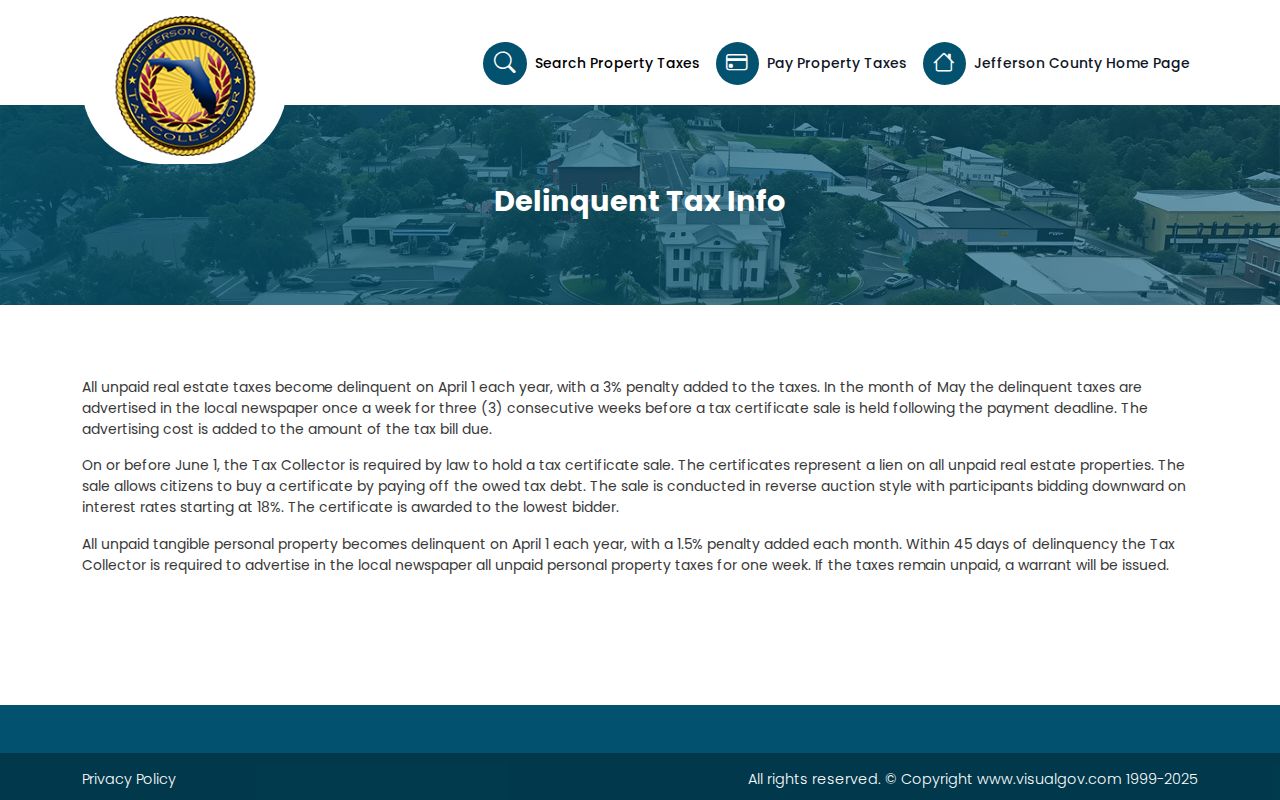
Sale dates shift by account. Confirm the specific parcel and the current-year notices in Jefferson County before relying on any sale date or redemption status.
Date labels differ. CAPture help uses due October 1 and delinquent after December 31 language, while detailed Collector material uses April 1 for delinquency and penalties. Preserve each office's wording and ask the Collector to resolve the account.
Contest a Jefferson County Assessment
A valuation protest belongs with the Jefferson County Board of Equalization, not the Tax Collector. Strong evidence names the parcel and tax year. It explains the disputed field and supports the requested value with relevant sales, condition evidence, photographs, appraisal material, or factual corrections. A deed consideration alone may not reflect market value. A neighboring assessment alone proves nothing either.
For the 2026 cycle, the BOE page posted a protest window of May 26 through June 24, 2026. That is not a standing annual date. Check the current notice before filing another year.
When CAPture or the online form is unavailable, the BOE page and the office route remain the fallback. Bring or send a focused parcel file. Keep proof of timely delivery and a copy of every submitted item, and leave unrelated documents out.
Appeal window. The published 2026 Jefferson County protest period was May 26 through June 24. Verify the current year's deadline before acting.